Maya Droughts: Lessons from the Past for a Climate-Changed Future
Imagine waking up one morning to find your well dry. Then, the crops begin to fail. The river you depend on for irrigation shrinks to a trickle, then disappears altogether. This wasn't a far-off nightmare for the Maya civilization. It was a reality that contributed to their decline. Today, we face a similar threat on a global scale. As climate change intensifies, understanding how past societies responded to environmental crises is more critical than ever. The story of the Maya civilization, and the role that prolonged droughts played in its decline, offers invaluable lessons for navigating the challenges of a climate-changed future.
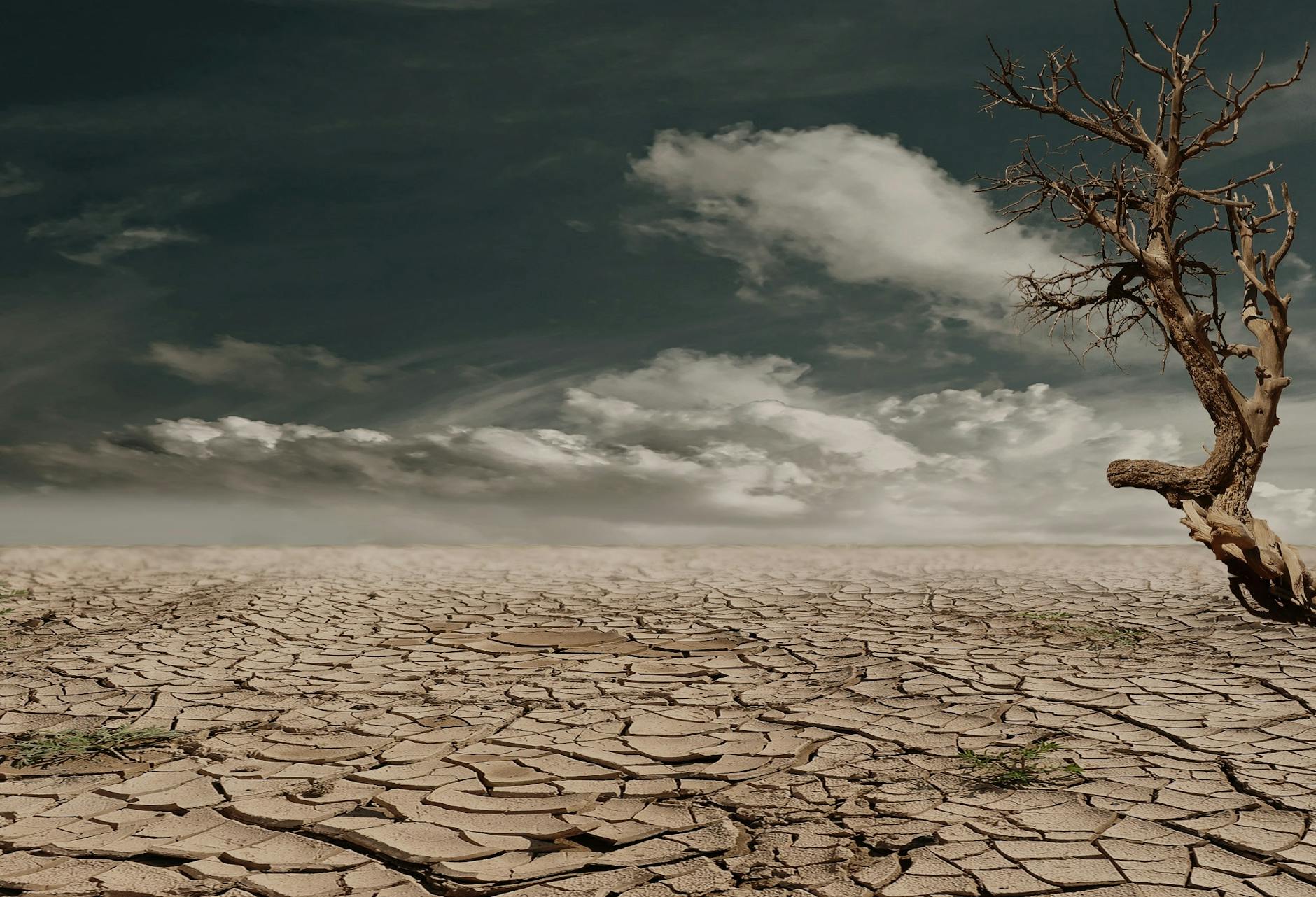
The cracked earth and withered tree serve as stark reminders of the devastating impact of prolonged drought, a threat faced by both the ancient Maya and our modern world.
By examining the Maya's rise and fall, particularly through the lens of cutting-edge climate research using stalagmite analysis, we can gain a deeper understanding of societal vulnerabilities, the importance of sustainable resource management, and the urgent need for proactive adaptation strategies. Let's delve into the fascinating world of the Maya, explore the science that reveals their climatic past, and consider the implications for our own future.
The Rise and Fall of the Maya Civilization
The Maya civilization flourished for centuries across present-day Yucatán Peninsula, Guatemala, Belize, and parts of Honduras and El Salvador, leaving an indelible mark on history. Their story unfolds across three major periods: the Preclassic (c. 2000 BCE – 250 CE), the Classic (c. 250 CE – 900 CE), and the Postclassic (c. 900 CE – 1697 CE).
This region, characterized by its diverse ecosystems ranging from rainforests to savannas, presented both opportunities and challenges. The Maya skillfully adapted to their environment, developing sophisticated agricultural techniques and intricate water management systems.
During the Classic period, the Maya reached their zenith. They were master mathematicians, developing a complex number system and the concept of zero. Their astronomical observations were remarkably accurate, allowing them to create precise calendars. Their architectural prowess is evident in the towering pyramids, elaborate palaces, and intricate temples that still stand today. They were also skilled agriculturalists, cultivating maize, beans, squash, and other crops to support a growing population.
However, around the 9th century CE, the Classic Maya civilization began to decline. Major cities were abandoned, monumental construction ceased, and the intricate writing system fell into disuse. The reasons for this collapse have been debated for decades, with theories ranging from warfare and overpopulation to disease and environmental degradation. But increasingly, evidence points to the critical role of prolonged and severe droughts.
Unveiling the Past: The Science of Stalagmite Analysis
To understand the climate conditions that prevailed during the Maya civilization, scientists turn to paleoclimatology, the study of past climates. One powerful tool in the paleoclimatologist's arsenal is stalagmite analysis.
Stalagmites are those cone-shaped formations you see rising from the floor of caves. They're created over thousands of years by water dripping from the cave ceiling. This water is rich in minerals, and as it drips, it leaves behind tiny layers of a mineral called calcite. Think of it like a very, very slow-motion 3D printer, building up the stalagmite layer by layer.
The magic of stalagmites lies in what's trapped within those layers. As the calcite forms, it incorporates elements from the surrounding environment, including different forms (or isotopes) of oxygen and carbon. These isotopes act like tiny fingerprints, recording the climate conditions at the time the layer was formed. For example, the ratio of different oxygen isotopes can tell scientists about past rainfall amounts. More of one type of oxygen might indicate drier conditions. By carefully analyzing these isotopes in each layer of the stalagmite, scientists can reconstruct a detailed timeline of past climate changes. In essence, these formations act as natural time capsules, preserving a record of the past environment.
Several studies have used stalagmite analysis to reconstruct the climate history of the Maya region. Research published in Science by Douglas Kennett and colleagues, analyzing stalagmites from Yok Balum Cave in Belize, revealed evidence of prolonged and severe droughts coinciding with the Classic Maya collapse. These droughts, lasting for decades at a time, would have had devastating consequences for Maya agriculture and water resources. Other studies, such as those conducted in the nearby Lake Chichancanab, Mexico, have corroborated these findings, providing further evidence of the severity and duration of these droughts.
While stalagmite analysis provides valuable insights, it's important to acknowledge its limitations. The interpretation of isotopic data can be complex, and the spatial coverage of stalagmite records is limited. However, when combined with other sources of evidence, such as pollen analysis and archaeological data, stalagmite analysis provides a powerful tool for understanding past climate change.

Stalagmites, like those found in Yok Balum Cave, Belize, provide a detailed climate record that helps us understand the environmental conditions during the rise and fall of the Maya civilization.
The Devastating Impact of Droughts on Maya Society
The Maya civilization relied heavily on agriculture, particularly the cultivation of maize. Prolonged droughts would have severely impacted crop yields, leading to food shortages and famine. The Maya developed sophisticated water management systems, including reservoirs and canals, to cope with seasonal variations in rainfall. However, these systems were likely insufficient to withstand the prolonged and intense droughts that occurred during the Classic period.
The consequences of these droughts would have been far-reaching. Food shortages could have led to social unrest and conflict, as people competed for scarce resources. The authority of the ruling elite may have been weakened, as they were unable to provide for their people. Ultimately, the droughts may have contributed to the migration and abandonment of major cities.
It's important to note that the impact of droughts likely varied across different Maya city-states. Some regions may have been more vulnerable than others, depending on their access to water resources and their ability to adapt to changing conditions. This highlights the importance of considering regional variations when studying the collapse of the Maya civilization.
Understanding Societal Vulnerabilities
While droughts played a significant role in the Maya collapse, it's important to recognize that environmental factors were not the sole cause. Other societal vulnerabilities likely exacerbated the impact of climate change.
Population growth and resource depletion may have put additional strain on the environment, making the Maya more vulnerable to drought. Political instability and warfare could have weakened their ability to cope with environmental challenges. Social inequality may have increased vulnerability to drought among certain segments of the population, as those with less access to resources suffered disproportionately.
For example, the Maya city of Tikal experienced significant population growth leading up to the droughts. This put a strain on resources, making the city more vulnerable when the rains failed. Competition for dwindling resources may have fueled conflicts between city-states, further destabilizing the region. The ruling elite, focused on maintaining their power, may have been slow to respond to the crisis, exacerbating the suffering of the common people. Archaeological evidence suggests that access to food and water became increasingly unequal during this period, with the elite maintaining their access while the lower classes suffered.
It's also possible that the Maya were unable or unwilling to adapt to changing environmental conditions. Their reliance on traditional agricultural practices and their rigid social and political structures may have limited their ability to respond effectively to the challenges posed by prolonged droughts. This underscores the importance of adaptability and innovation in the face of environmental change.
Lessons for a Climate-Changed Future: Heeding the Warnings of the Past
The story of the Maya collapse offers valuable lessons for navigating the challenges of a climate-changed future. We face many of the same environmental challenges that the Maya faced, including climate change, water scarcity, and resource depletion.
The Maya's experience underscores the importance of sustainable resource management. We need to adopt sustainable water management practices, promote sustainable agriculture, and implement responsible land use planning. We also need to build resilience to climate change by diversifying our agricultural systems, investing in water infrastructure, and strengthening our governance and conflict resolution mechanisms.
Perhaps most importantly, we need to address the underlying social and economic inequalities that make some populations more vulnerable to climate change than others. Promoting social equity and reducing inequality are essential for building a more resilient and sustainable future. As one commenter put it:
It is literally a requirement of having that certification. An enormous amount of conservation of wild populations and the associated species would simply be impossible without the money and other resources these zoos make available to conservation activities.
This highlights the interconnectedness of environmental and social issues.
Understanding the complex interplay between environmental factors and societal vulnerabilities requires interdisciplinary research. By combining archaeological, climatological, and social science research, we can gain a more comprehensive understanding of past and present challenges.
It's easy to feel overwhelmed by the scale of the climate crisis, and some may even feel that "it's too late, and we have lost the fight against climate change." However, succumbing to despair is not an option. As another commenter wisely stated:
we're still going to be here, organizing, coping, trying, failing, winning sometimes, sense-making, loving, etc.
Even in the face of daunting challenges, human resilience and ingenuity can offer pathways toward a more sustainable future.
One promising avenue lies in embracing innovative agricultural practices. For instance, the adoption of cover crops and no-till farming has shown remarkable results in building climate resilience. Farmers who have implemented these techniques have reported significant improvements in water infiltration, organic matter content, and overall soil health. In fact, some have seen "about a 50% yield increase in both corn and soybeans." These practices not only enhance crop yields but also reduce input costs, making them a win-win for both farmers and the environment.

This image illustrates a sustainable agricultural practice, using a structure to dry crops effectively. Cover crops and no-till farming are other practices helping build climate resilience.
Furthermore, the transition to renewable energy sources, such as rooftop solar, offers another crucial step towards a sustainable future. By decentralizing energy production and reducing our reliance on fossil fuels, we can mitigate the impacts of climate change and create a more resilient energy system.
Conclusion: A Call to Action
The Maya civilization's story is a cautionary tale, but it's also a source of hope. By learning from the past, we can avoid repeating the mistakes of the Maya and create a more sustainable future for ourselves and for generations to come.
So, what can you do? Start by making small changes in your daily life. Reduce your carbon footprint by using public transportation, cycling, or walking whenever possible. Support local farmers and businesses that prioritize sustainability. Advocate for policies that promote renewable energy and protect our natural resources. Consider joining a local environmental organization or volunteering your time to support climate action initiatives. Educate yourself and others about the challenges we face and the solutions that are available. Even small actions, when multiplied across communities, can create significant change. Talk to your neighbors, your friends, and your elected officials. Let them know that you care about climate change and that you want them to take action.
The future is not predetermined. By embracing innovation, collaboration, and a commitment to sustainability, we can create a world where both humanity and nature can thrive.
References/Further Reading
- Kennett, D. J., et al. "Development and disintegration of Maya political systems in response to climate change." Science 338.6108 (2012): 788-791.
- Medina-Elizalde, M., et al. "Variations in a tropical storm proxy record from northeastern Mesoamerica during the late Holocene." Geology 38.2 (2010): 179-182.
- Diamond, Jared. Collapse: How Societies Choose to Fail or Succeed. Viking, 2005.
- Lucero, Lisa J. "The Collapse of the Classic Maya: A Case for Complexity." American Anthropologist 104.3 (2002): 643-660.